



Improve Your Sleep With These 3 Simple Mindfulness Exercises
Are you spending most nights tossing and turning, lying awake at the mercy of your thoughts? Do you wake up during the night plagued with worry, finding yourself suddenly reaching for your phone to scroll through social media or Coronavirus news stories?
If you suffer from interrupted sleep or being kept up at night, you’re not alone. Research shows that as many as 30% of Canadians over the age of 18 suffer from insomnia or sleep deprivation. What’s more, as you get older, your body’s growth hormones slow and produce less ‘slow wave’ or deep sleep, making you even more susceptible to insomnia. A healthy night’s sleep could be your best defense to stay healthy and avoid getting sick. The good news is that it might be easier than you think – research shows that with as little as 10 minutes a day, a regular mindfulness practice can be one of most powerful sleep aids out there. Read on to discover how these exercises could change your relationship with sleep!
What is Mindfulness and How Can It Improve Your Sleep?
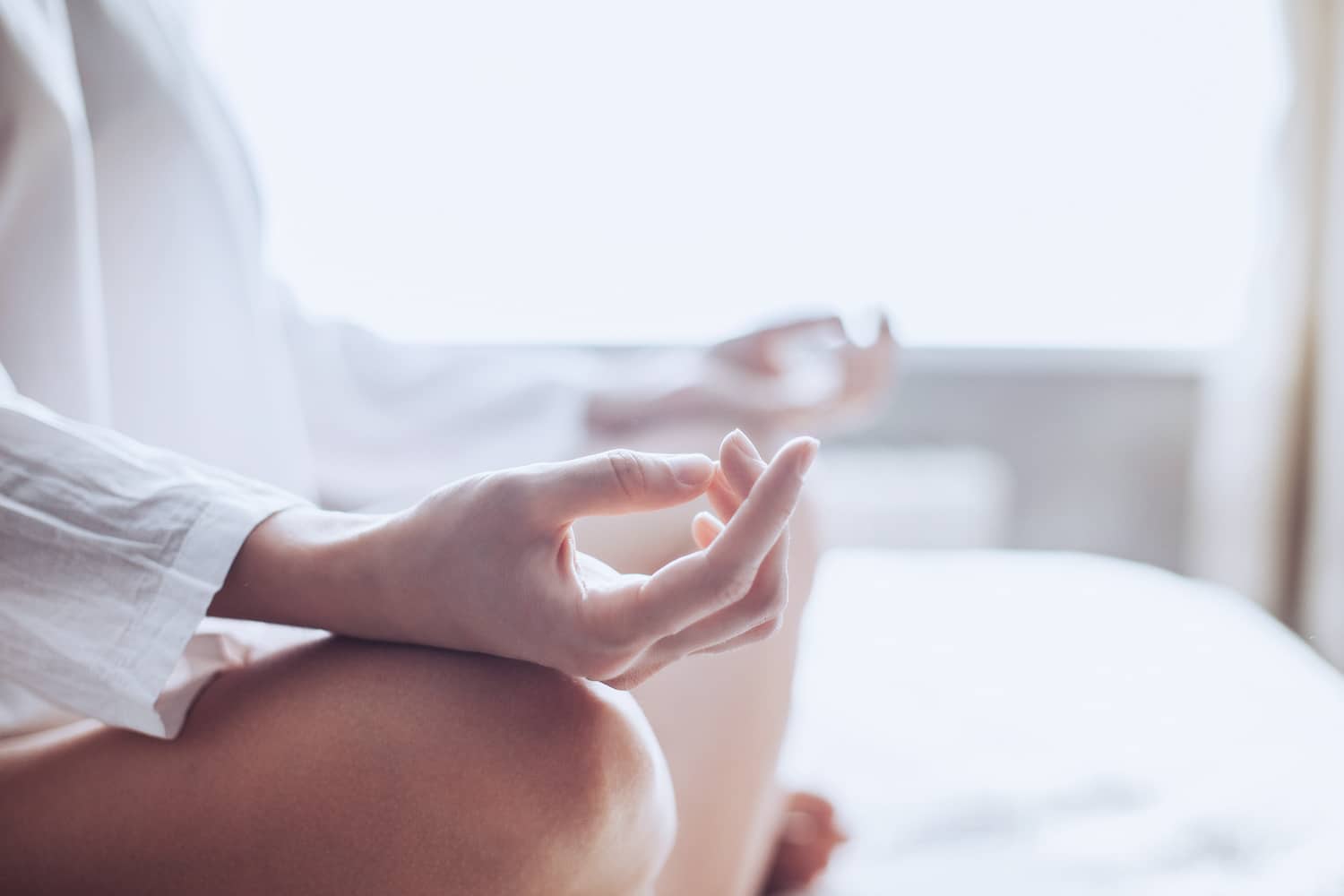
Mindfulness can be thought of as present moment awareness that is intentional and detached from any particular or desired outcome. By slowing our breathing and lowering our heart rate, mindfulness practices elicit the body’s natural relaxation response, allowing us to enter a state of deep rest more easily.
Sleep researchers from Oregon State University have found that with a regular practice of just 10 minutes a day, mindfulness exercises can induce similar benefits as an extra 44 minutes of sleep.
3 Easy Mindfulness Practices You Can Try Today
Not only are these exercises easy and accessible, you can do them entirely on your own. All you need is 10-20 minutes and a quiet place where you can relax. They can be done immediately before going to bed, or as some studies suggest, it’s even better to practice during the day to help you fall asleep more easily at night. Here are 3 simple exercises you can try:
1. Deep Breathing
Also known as diaphragmatic breathing, this simple technique involves consciously following the breath as it moves in and out of your body. Here’s how to do it:
- Begin by sitting or lying down and placing one hand on your chest and another on your abdomen.
- Breathe in slowly through your nose and feel your abdomen rise, followed by your chest. When you’ve reached maximum inhalation, gently hold your breath for a count of 3, then slowly exhale through your mouth.
- On the out breath, try to exhale all of the air out to feel your ab muscles contract slightly.
- Repeat 10 times or more. You should feel your body and mind feeling more relaxed and ready to rest.
A variation of this exercise is known as “4-7-8”. To practice it, inhale for 4 seconds, hold your breath for 7 seconds, then exhale for 8 seconds. Repeat 5-10 times.
2. Body Scan Meditation
Some researchers have found body scans to be particularly beneficial for treating insomnia. This technique works by observing sensations from your feet to your head to relax your body and mind. Here’s how to do it:
- Begin by closing your eyes and bringing your focus to your natural breathing. Spend a few minutes focusing on your breathing to begin.
- Next, move your focus to the toes of your right foot. Become aware of any sensations that are present there. Sensations can be buzzing, tingling, warmth or coolness, or you might experience no feeling at all. Do your best not to label sensations – there are no good or bad sensations.
- Next, move your focus to the sole of your foot. Spending 3-5 seconds on each section, continue moving your attention along your ankle and up your leg and body, observing any sensations present. Notice when your mind begins to wander. It will wander! That’s ok.
- Continue this pattern of moving your attention along the body until you reach the top of your head, paying close attention to any part of your body where you feel pain or discomfort.
- When you complete your body scan, notice any changes in your body or mind. You should be feeling more relaxed and ready to rest if you haven’t fallen asleep.
3. Guided Imagery
Using guided imagery or visualization is a relaxation technique where you use your imagination to picture a scene that brings you feelings of peace. This may be a place you’ve been before or one from your imagination, such as a quiet forest, the beach, or a soothing waterfall. Here’s a simple visualization exercise you can try:
- Close your eyes and allow your body to relax by taking a few deep breaths, inhaling through your nose and out through your mouth.
- Next, picture yourself in a restful place. Imagine it with as many sensory details as possible: sounds, sights, smells, tastes, and touch. Let’s say you are picturing yourself in a peaceful garden, you might:
- See the sun reflecting off the leaves of plants
- Hear the birds singing
- Smell the fragrant flowers
- Feel the warmth of the sun on your skin
- Taste the fresh air
- Notice yourself feeling calm and peaceful just being in this place. When you feel ready to leave, gently open your eyes.
Many different apps offer a selection of guided imagery exercises that you can listen to from your phone.
Tips and Reminders For Starting a Mindfulness Practice
Mindfulness practices are powerful tools to treat insomnia and interrupted sleep. Remember that starting anything new comes with some ups and downs. To be successful, set aside a regular time each day and try not to get discouraged if you don’t get results right away. If you can commit to 10 minutes or more a day for 6-8 weeks, you should start to notice a difference. While this might seem daunting – remember that resting is productive!
Whichever mindfulness practice you decide to try, always have self compassion, trust in yourself, and try to maintain a non-judgmental awareness.